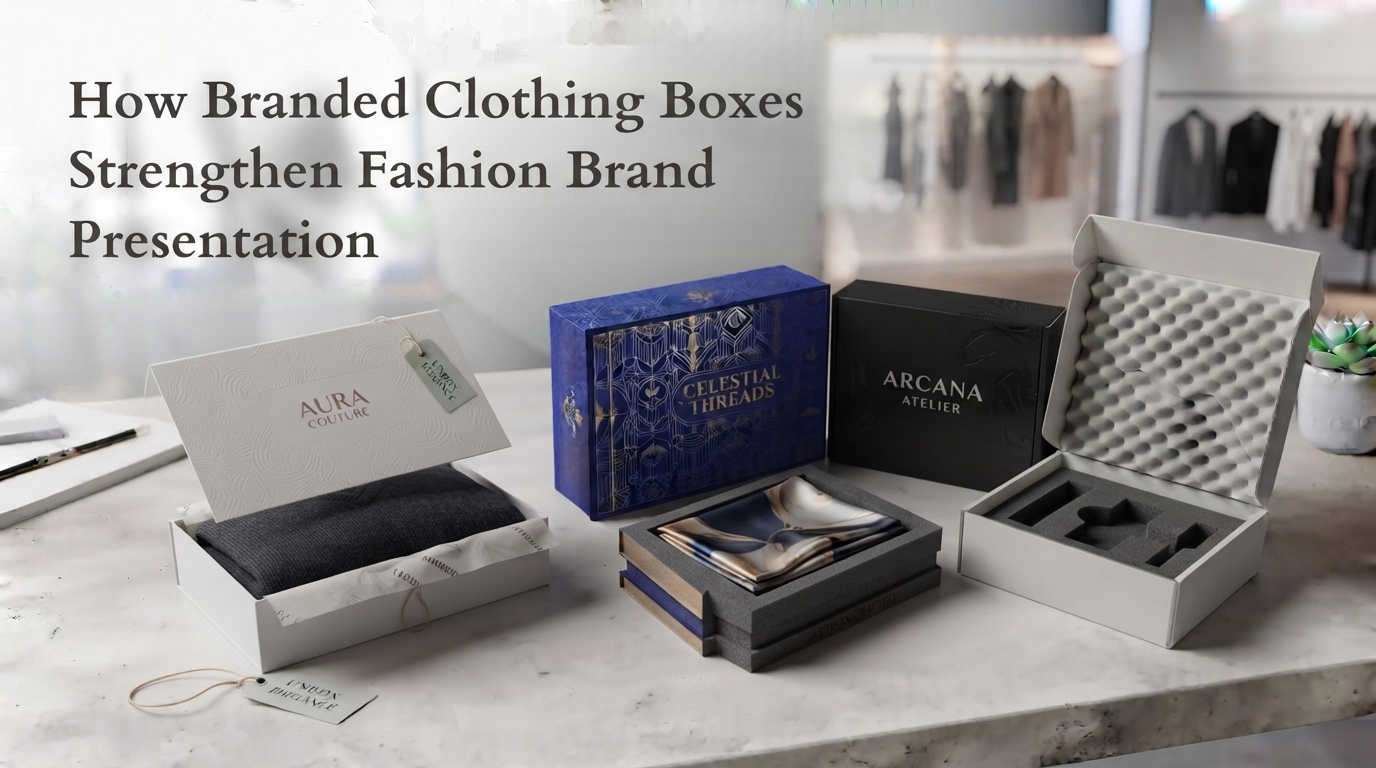
Packaging plays an important role in how customers experience a clothing brand. While the garment itself remains the primary product, the box surrounding it can influence how that product is presented, protected, and remembered.

For fashion brands, retailers, boutiques, apparel startups, and ecommerce businesses, packaging can become part of the brand experience. A thoughtfully designed clothing box can introduce the brand before the customer even sees the garment.
Using Custom Product Packaging allows businesses to approach packaging around their products, dimensions, presentation goals, branding, quantity, and intended distribution method.
Why Branded Clothing Boxes Matter
A clothing box is more than a container. It can become a physical representation of a company’s identity.
When a customer receives a neatly packaged shirt, dress, jacket, accessory, or other garment, the box contributes to the first impression. Details such as the logo, typography, colors, structure, and finish can all influence the perceived quality of the purchase.
Branded clothing boxes can help businesses:
- Create stronger brand recognition
- Improve garment presentation
- Organize products during fulfillment
- Support premium retail experiences
- Make unboxing more memorable
- Create consistency across packaging materials
- Differentiate products from competing brands
The right packaging should complement the garment rather than distract from it.
Creating a Consistent Fashion Brand Identity
Consistency is one of the most important considerations when developing branded packaging.
A clothing brand may already have an established visual identity across its website, social media, storefront, labels, and advertising. Packaging should ideally support that identity.
Elements that can be coordinated include:
- Logo placement
- Brand colors
- Typography
- Patterns
- Photography or illustrations
- Taglines
- Product information
- Interior and exterior artwork
A consistent approach makes different customer touchpoints feel connected.
For example, a minimalist fashion label might choose restrained typography and a simple logo treatment, while a streetwear company could use stronger graphics and more expressive artwork.
Choosing the Right Box Dimensions
The dimensions of a clothing box should be determined by the products being packaged.
A box designed for a folded T-shirt will have different requirements from one intended for multiple garments or a larger fashion item.
Before selecting dimensions, brands should consider:
- Garment type
- Folded dimensions
- Number of garments per box
- Thickness of the clothing
- Additional inserts
- Tissue paper
- Product cards
- Accessories
- Shipping requirements
- Storage limitations
Measuring the final packaged product rather than relying only on garment size can lead to a more practical packaging specification.
Branded Clothing Boxes for Ecommerce
Ecommerce has made packaging an important part of the customer journey.
When a customer orders clothing online, they do not experience the product in a physical store. The package may therefore become their first tangible interaction with the brand.
A well-planned clothing box can make that moment more engaging.
The packaging can include coordinated elements such as:
- Branded tissue paper
- Thank-you cards
- Product information
- Stickers
- Care instructions
- Promotional inserts
- Protective layers
The goal is not necessarily to add more components. Instead, every element should serve a useful purpose while contributing to a consistent brand presentation.
Improving the Unboxing Experience
Unboxing has become an important consideration for many fashion businesses.
A customer opening a clothing package may notice the exterior box first, followed by the printing, opening mechanism, tissue, garment arrangement, and included materials.
The sequence can be planned intentionally.
For example:
Outer box → branded interior → tissue paper → folded garment → brand card
This type of structure gives brands an opportunity to guide the customer through the product presentation.
The unboxing experience should remain practical, however. Excessive packaging can make fulfillment more complicated and increase material use.
Selecting a Suitable Box Style
Different clothing businesses may require different box structures.
Depending on the product and presentation goals, options may include:
- Folding cartons
- Two-piece boxes
- Rigid setup boxes
- Mailer-style boxes
- Sleeve-and-tray structures
- Drawer-style packaging
- Magnetic closure boxes
The best option depends on factors such as product dimensions, budget, order volume, storage, shipping requirements, and desired presentation.
A lightweight ecommerce garment may need a different solution from a premium fashion collection sold through luxury retail.
Using Printed Artwork Strategically
Printing is one of the easiest ways to make a clothing box recognizable.
A brand does not always need to cover every surface with artwork. Strategic placement can often create a stronger visual result.
Possible areas for branding include:
- Box lid
- Box sides
- Interior
- Bottom panel
- Sleeve
- Insert
- Product card
A logo centered on a box lid can create a clean premium appearance. Alternatively, a repeating pattern can create a more distinctive visual identity.
The artwork should be prepared according to the final box structure so important elements are positioned correctly.
Premium Presentation for Fashion Brands
Fashion packaging often needs to balance aesthetics with functionality.
A premium presentation can come from a combination of:
- Strong structural design
- Appropriate proportions
- High-quality printing
- Refined typography
- Consistent branding
- Suitable materials
- Carefully selected finishes
- Organized product placement
Premium does not always mean complicated.
A simple box with well-planned branding can appear more sophisticated than a heavily decorated package with no clear visual hierarchy.
Coordinating Boxes With Apparel Packaging
A clothing box rarely exists in isolation.
Brands may combine their boxes with bags, tissue paper, labels, stickers, hang tags, ribbons, and other packaging components.
Using custom clothing packaging as part of a wider packaging strategy can help businesses create a consistent presentation across different sales channels.
For example, a retailer could coordinate its:
- Clothing boxes
- Shopping bags
- Tissue paper
- Garment labels
- Thank-you cards
- Promotional inserts
Using shared visual elements across these components helps reinforce brand recognition.
Clothing Boxes for Different Fashion Products
Different garments can create different packaging requirements.
T-Shirts
T-shirts are commonly folded and may fit efficiently into relatively compact boxes.
Dresses
Dresses may require more internal space depending on their folded dimensions and fabric characteristics.
Shirts and Blouses
These garments can benefit from boxes designed around their folded presentation.
Sweaters and Hoodies
Thicker garments may require greater internal capacity.
Accessories
Small fashion accessories can sometimes be packaged together with clothing or separately, depending on the brand’s fulfillment strategy.
The key is to develop the box around the actual finished product configuration.
Adding Inserts to Clothing Boxes
Inserts can improve organization and presentation when they have a specific purpose.
Possible inserts include:
- Product cards
- Brand stories
- Care instructions
- Promotional cards
- Dividers
- Product information
- Accessory compartments
For premium collections, inserts can also help create a more structured presentation inside the box.
However, inserts should be planned around the available internal space so they do not interfere with the garment.
Shipping Considerations
A clothing box used for ecommerce needs to be considered in the context of transportation.
The packaging may encounter:
- Handling
- Stacking
- Compression
- Movement
- Storage
- Delivery conditions
Brands should consider how the completed package will travel from fulfillment to the customer’s location.
If the product requires additional protection, an outer shipping package can be used around the branded presentation box.
This approach separates the customer-facing presentation from the protective requirements of transportation.
How Branded Boxes Can Support Customer Loyalty
Packaging alone cannot create customer loyalty, but it can contribute to the overall experience.
When customers receive a product that looks carefully considered from the outside to the inside, it can reinforce their perception of the brand.
This is particularly relevant for fashion companies where visual identity plays an important role in the buying decision.
A recognizable box can also make repeat purchases feel consistent. Over time, packaging can become one of the visual cues customers associate with the brand.
Common Mistakes to Avoid
Choosing a Box Before Measuring the Product
The box should be designed around the actual folded and packaged garment.
Ignoring Shipping Requirements
A visually attractive box still needs to be appropriate for its intended distribution method.
Overloading the Design
Too many colors, graphics, and messages can reduce visual clarity.
Forgetting the Interior
The inside of the box is part of the unboxing experience and should not automatically be overlooked.
Adding Unnecessary Inserts
Every additional component should have a practical or branding purpose.
Inconsistent Packaging
Using unrelated designs across boxes, bags, labels, and other materials can weaken brand consistency.
How to Plan Custom Branded Clothing Boxes
A structured planning process can make packaging development easier.
1. Identify the garments.
Determine which clothing products will use the box.
2. Measure the final folded products.
Consider actual packaged dimensions rather than general garment sizing.
3. Determine the typical order configuration.
Decide whether customers will receive one garment or multiple items per box.
4. Establish the presentation goal.
Determine whether the packaging should feel minimalist, premium, playful, modern, or functional.
5. Choose the structure.
Select a box style suitable for the product and distribution method.
6. Plan the artwork.
Position logos, colors, patterns, and other graphics around the box’s dieline.
7. Consider interior elements.
Determine whether tissue, inserts, cards, or other components are needed.
8. Review shipping requirements.
Consider how the finished package will be handled and transported.
9. Check storage requirements.
Make sure the packaging can be stored efficiently before use.
10. Review the final specification.
Confirm dimensions, artwork, construction, materials, and finishing before production.
Why Custom Branded Clothing Boxes Can Be a Long-Term Brand Asset
Packaging is often treated as a short-term operational requirement, but a strong design can become part of a brand’s identity.
A recognizable clothing box can support:
- Consistent customer experiences
- Stronger visual recognition
- Premium product positioning
- Better retail presentation
- More cohesive ecommerce fulfillment
- Memorable unboxing moments
The most effective approach is to think beyond the box itself and consider how it interacts with the complete customer journey.
Frequently Asked Questions
1. What are branded clothing boxes?
Branded clothing boxes are packaging boxes customized with a company’s branding, artwork, colors, logos, or other design elements for presenting and packaging garments.
2. Can clothing boxes be customized with a logo?
Yes. A clothing box can be designed around a brand’s logo and broader visual identity, with placement planned according to the box structure.
3. What size box should I use for clothing?
The appropriate size depends on the garment type, folded dimensions, quantity, thickness, inserts, and desired presentation. Measuring the final packaged configuration is generally more useful than relying on garment size alone.
4. Are branded clothing boxes suitable for ecommerce?
Yes. They can be incorporated into ecommerce fulfillment as customer-facing packaging, with additional protective shipping packaging used when required.
5. Can clothing boxes include inserts?
Yes. Depending on the design, inserts can be used for product information, care instructions, promotional messages, accessories, or other presentation purposes.
Conclusion
Branded clothing boxes can help fashion businesses turn ordinary product packaging into a recognizable part of the customer experience.
From selecting the right dimensions and structure to planning artwork, inserts, finishes, and shipping considerations, every element can contribute to a more cohesive presentation.
For ecommerce businesses, retailers, boutiques, and fashion brands, the packaging should ultimately support both practical fulfillment and brand identity.
When the box works together with shopping bags, tissue paper, labels, and other apparel packaging components, it can create a consistent experience that customers recognize from one purchase to the next.